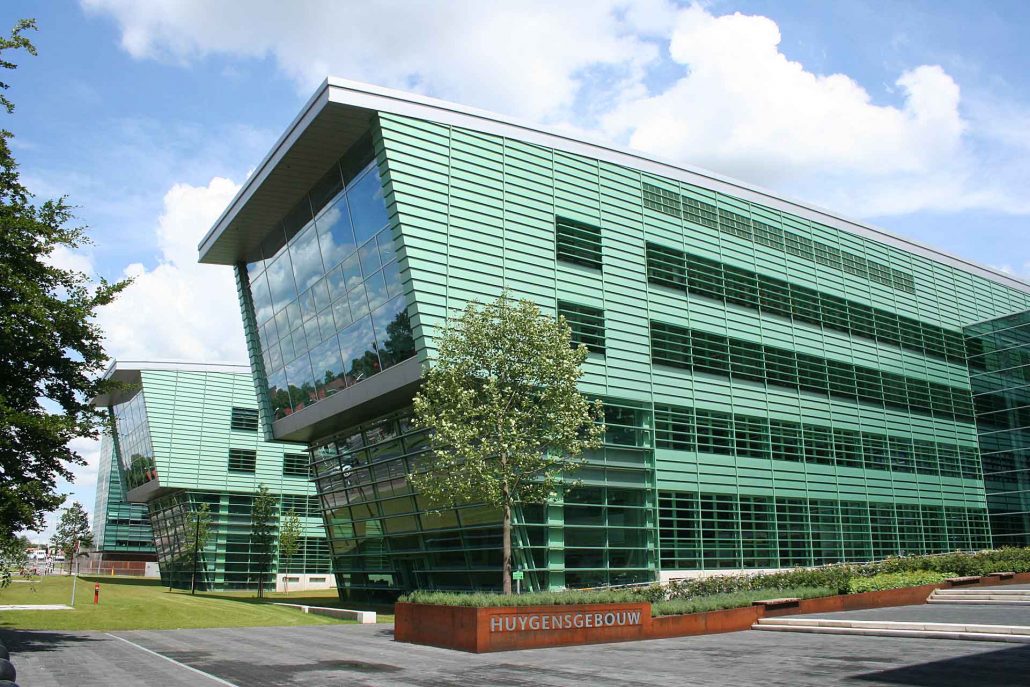
The Institute for Science Education is an interdisciplinary institute hosting a scientific group (Science Education Research) and an outreach organisation (PUC, the Radboud Pre-University College of Science). Our research aims to develop theories, methods and tools to support the development of science students’ subject-specific thinking and science teachers’ practical knowledge and skills. Teaching activities include courses in a Master’s programme in science teacher education and an elective science education programme for Bachelor’s students. Our institute contributes to national curriculum development for primary and secondary education. Radboud PUC of Science acts as a bridge between secondary schools and university and organises enriching science activities for students and teachers in secondary schools. PUC also provides a practice environment for courses developed by the institute.
The Faculty of Science is a complete, student-oriented science faculty where research and education are closely related. The faculty aims to be an academic community of international character, where staff members from different backgrounds can combine their talents with the common goal of being a leading faculty of science in Europe.
At Radboud University, we aim to make an impact through our work. We achieve this by conducting groundbreaking research, providing high-quality education, offering excellent support, and fostering collaborations within and outside the university. In doing so, we contribute indispensably to a healthy, free world with equal opportunities for all. To accomplish this, we need even more colleagues who, based on their expertise, are willing to search for answers. We advocate for an inclusive community and welcome employees with diverse backgrounds, cultures, and perspectives. Will you also contribute to making the world a little better? You have a part to play.
Tom Bielik‘s research focuses on various aspects of complexity in science teaching and learning, including the use of models and modeling, systems thinking, argumentation, and critical thinking. In his studies, he investigate how to support biology pre- and in-service teachers and how to engage secondary science students in deep learning.
Bielik is interested in questions such as: how do computational models and modeling support students in problem-solving and explaining phenomena? How can critical reflective thinking support students in becoming better science evaluators and decision-makers? And in what ways does systems thinking help students make sense of socio-scientific issues?