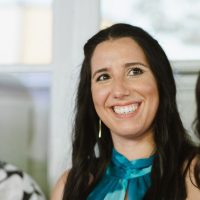
The Autonomous University of Barcelona (UAB) is a public institution founded in 1968 and internationally recognized for its excellence in research and teaching. Located mainly on the Bellaterra campus, it is known for its innovative, transformative, sustainable, and strongly international character. It offers more than 100 undergraduate degrees, along with a wide range of master’s and doctoral programs, within an academic and natural environment that enriches the university experience. In addition, the UAB is a leading institution in the initial and continuing education of primary and secondary school teachers, integrating this mission into a long-standing tradition of educational quality and research engagement.
The ACELEC research group (School Scientific Activity: Languages, Tools and Contexts) is a Consolidated Research Group at the UAB specializing in science education. Formed through the merger of several groups with solid trajectories in educational innovation and knowledge transfer, it focuses on scientific education understood as School Scientific Activity (ACE), emphasizing epistemic practices, modelling, critical thinking, and education for sustainability. ACELEC is structured into four communities of practice and brings together more than 60 local collaborators, standing out for its high scientific productivity and for projects aimed at transforming the teaching and learning of science across diverse educational contexts.
Dr. Victor López Simó (Physicist) is a physics education researcher at the UAB whose work focuses on students’ conceptual understanding of physics, the use of sensors and digital tools, and the role of simulations in supporting scientific reasoning. His research examines how learners interpret visual representations in physics simulations and how modelling‑based inquiry can enhance learning in secondary science classrooms.
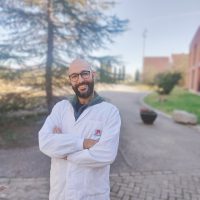
Dr. Digna Couso Lagarón (Physicist) is a science education researcher atthe UAB and a leading figure in STEM education, known for her work on modelling cycles, didactic design and science teaching as participation in scientific practices. Her research places strong emphasis on equity, gender perspectives and students’ STEM identities, and she plays a central role in the initial preparation of future science teachers.
Digna
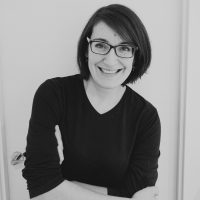
Dr. Carme Grimalt Álvaro (Chemist) is a science education researche at the UAB specializing in chemistry education, classroom interaction and the use of digital technologies in science teaching. She investigates teachers’ digital competence, students’ STEM self‑identification, and how classroom tools can support inquiry, modelling and argumentation in chemistry lessons.
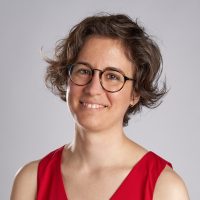
Dr. Anna Marbà Tallada (Biologist) is a science education researcher at the UAB whose work centres on biology education, learning progressions and the development of increasingly sophisticated scientific models. She has contributed extensively to understanding how students build and refine biological knowledge and how representations such as models and maquettes support learning.
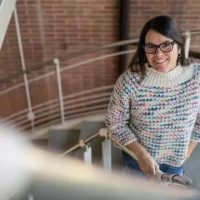
Dr. Èlia Tena Gallego (Primary Education) is a science education researcher at UAB focused on primary teacher education, Design‑Based Research and instructional design in science education. Her work involves creating and evaluating high‑quality teaching–learning sequences, supporting the adoption of model‑based inquiry in primary classrooms and helping teachers integrate research‑informed STEM practices.